
Key Takeaways
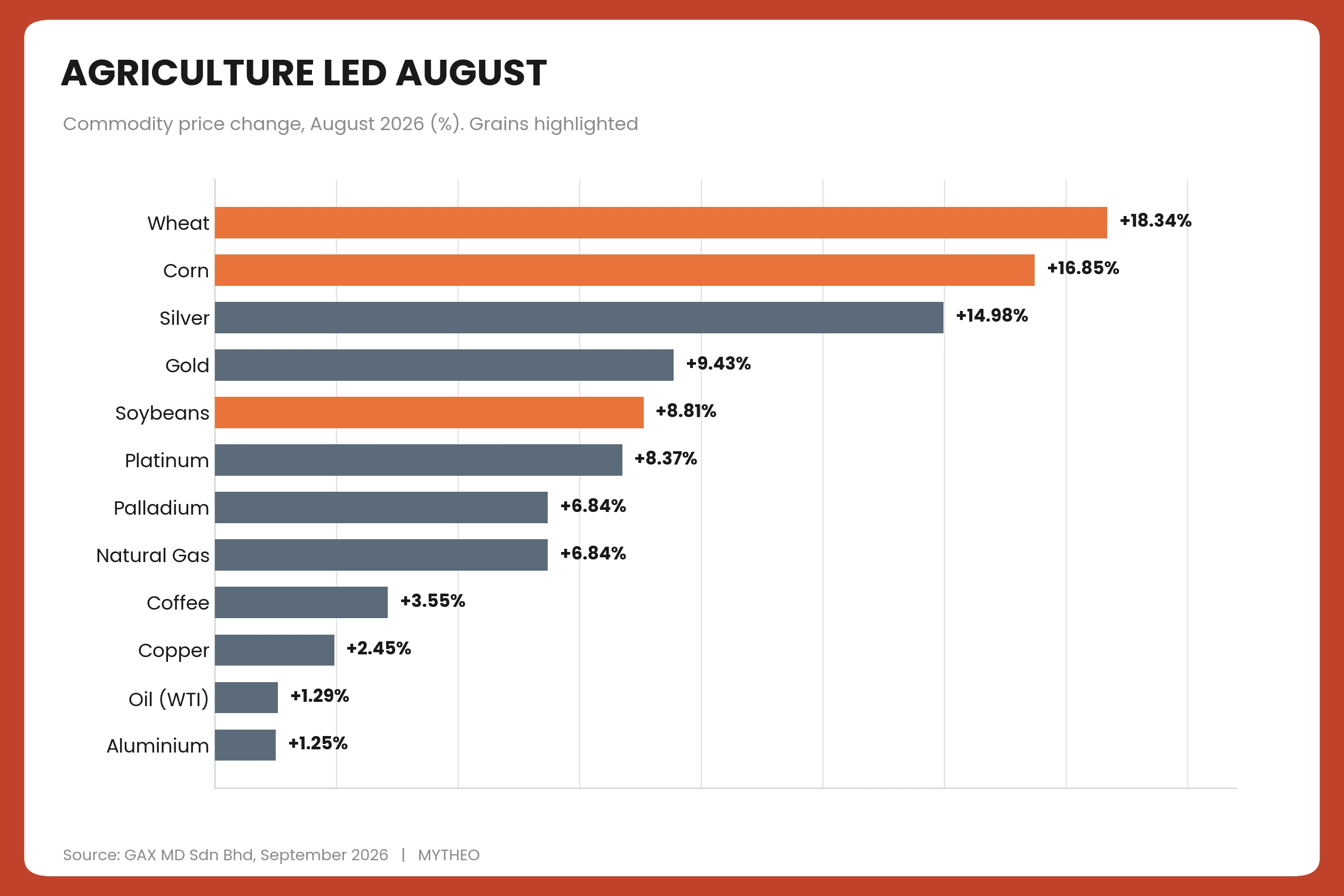
- El Nino-driven droughts pushed wheat up 18.34% and corn up 16.85% in August. However, past event showed that the tradeable price spikes during these weather events are brief and difficult to time consistently.
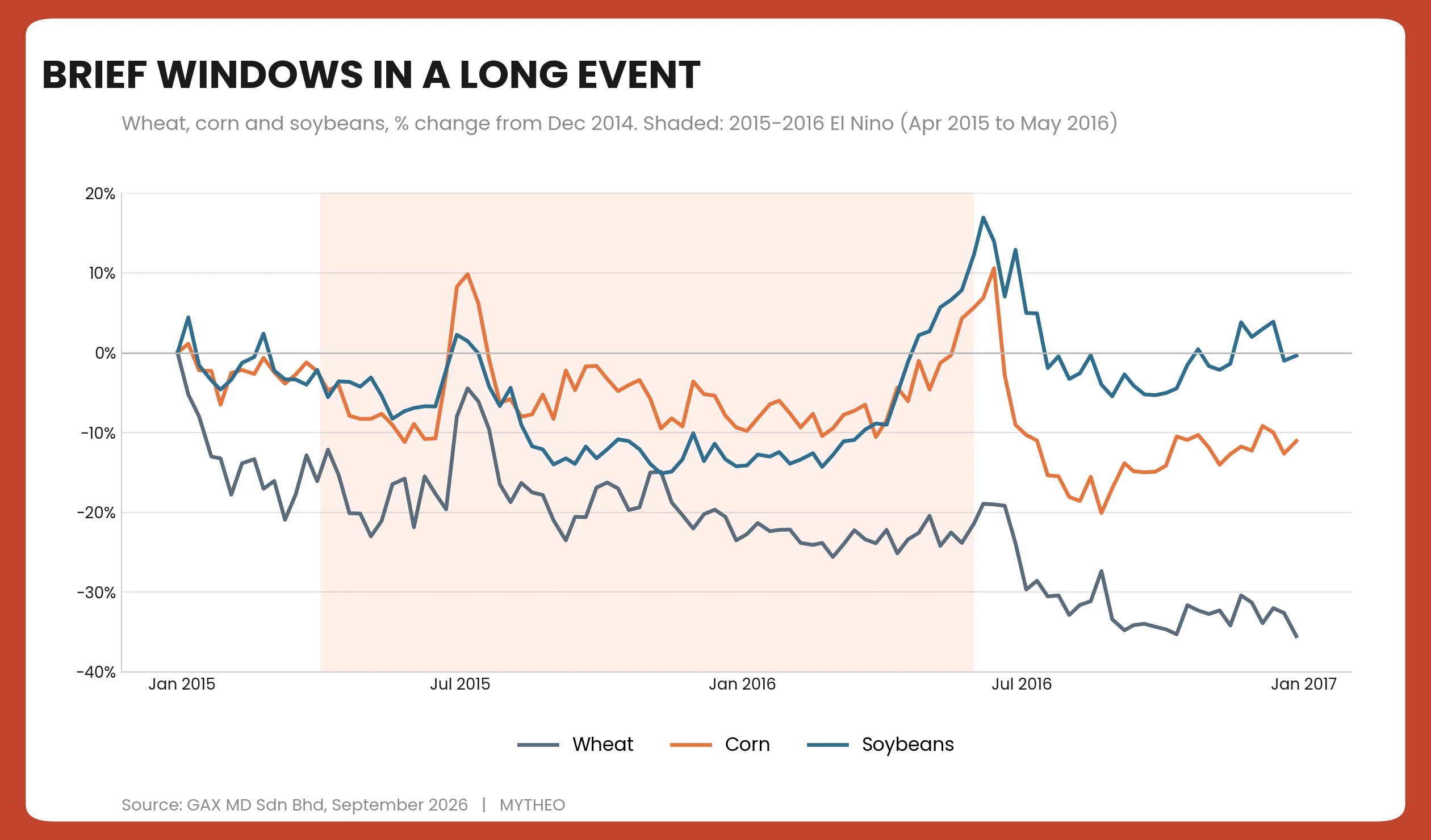
- During the last super El Nino, grain prices spiked at the start of the event and normalized within two months, then spiked again briefly near the end. A longer weather cycle does not historically translate to a longer, more profitable trade.
- Rather than chasing a pure El Nino trade, MYTHEO integrates agriculture into a broader structural inflation-hedge strategy within the Essential and Inflation Hedge portfolios, protecting investors from the volatility of weather-driven market timing.
The Meteorological Catalyst
One of the more overlooked market themes in recent months has been the strong performance of agriculture-related assets, driven by the return of El Nino. El Nino is a naturally occurring climate phenomenon that causes unusually warm sea surface temperatures in the Pacific Ocean. While it originates thousands of miles away, its impact is felt across the globe through altered weather patterns, often bringing hotter and drier conditions to major agricultural regions.
The World Meteorological Organization (WMO) estimated in June 2026 that there was an 80% probability of El Nino developing between June and August. Meanwhile, the US National Oceanic and Atmospheric Administration (NOAA) assigned a 96% probability that El Nino would persist into early 2027.
The Market Reaction: A Supply-Side Shock
There are signs that El Nino has already begun. In Malaysia, the impact is already visible on the ground. One of the most immediate local effects is deteriorating air quality caused by forest fires in Indonesia. As El Nino begins to disrupt crop yields in key farming regions across Australia, Southeast Asia, and parts of the United States, supply concerns have intensified. Agricultural commodity prices have responded sharply. As of the end of August, wheat had surged 18.34%, while corn gained 16.85% and soybeans advanced 8.81%.
Agricultural Commodities Outperformed in August as Supply Concerns Intensified
Meteorologists expect the current El Nino event to persist until at least February next year, with forecasts suggesting it could rank among the strongest on record. The UK Met Office has gone even further, describing the phenomenon as potentially the "strongest in living memory". Should dry conditions persist across key agricultural regions, crop yields may come under further pressure, keeping agricultural commodity prices elevated and supporting companies across the broader agricultural value chain.
Malaysian investors may be particularly familiar with the El Nino investment theme given Bursa Malaysia's significant exposure to the plantation sector, which is highly sensitive to changes in weather patterns. Historically, El Nino has been viewed as a major catalyst for palm oil prices and plantation stocks, as prolonged dry conditions can affect crop yields and tighten supply.
The investment case appears compelling. However, history suggests that weather-driven themes are rarely as straightforward as they first appear.
The Trap of Weather-Driven Thematic Investing
Investors often assume that a long-lasting weather event translates into a long-lasting investment opportunity. Unfortunately, markets do not work that way.
To understand the risk, we must look at the 2015-2016 Super El Nino cycle. (The 1997-1998 event is largely discarded by analysts, as its market impact was completely overshadowed by the Asian Financial Crisis).
The 2015-2016 event lasted from April 2015 to May 2016, with its strongest phase occurring between November 2015 and January 2016. Despite persisting for more than a year, the associated rallies in agricultural commodities were remarkably short-lived.
Soybeans, corn, and wheat all experienced sharp gains as fears of production disruptions emerged. However, much of those gains faded within a matter of weeks as markets adjusted to higher prices and alternative supply sources. A second, brief rally appeared near the end of the event in April 2016, only to reverse just as quickly.
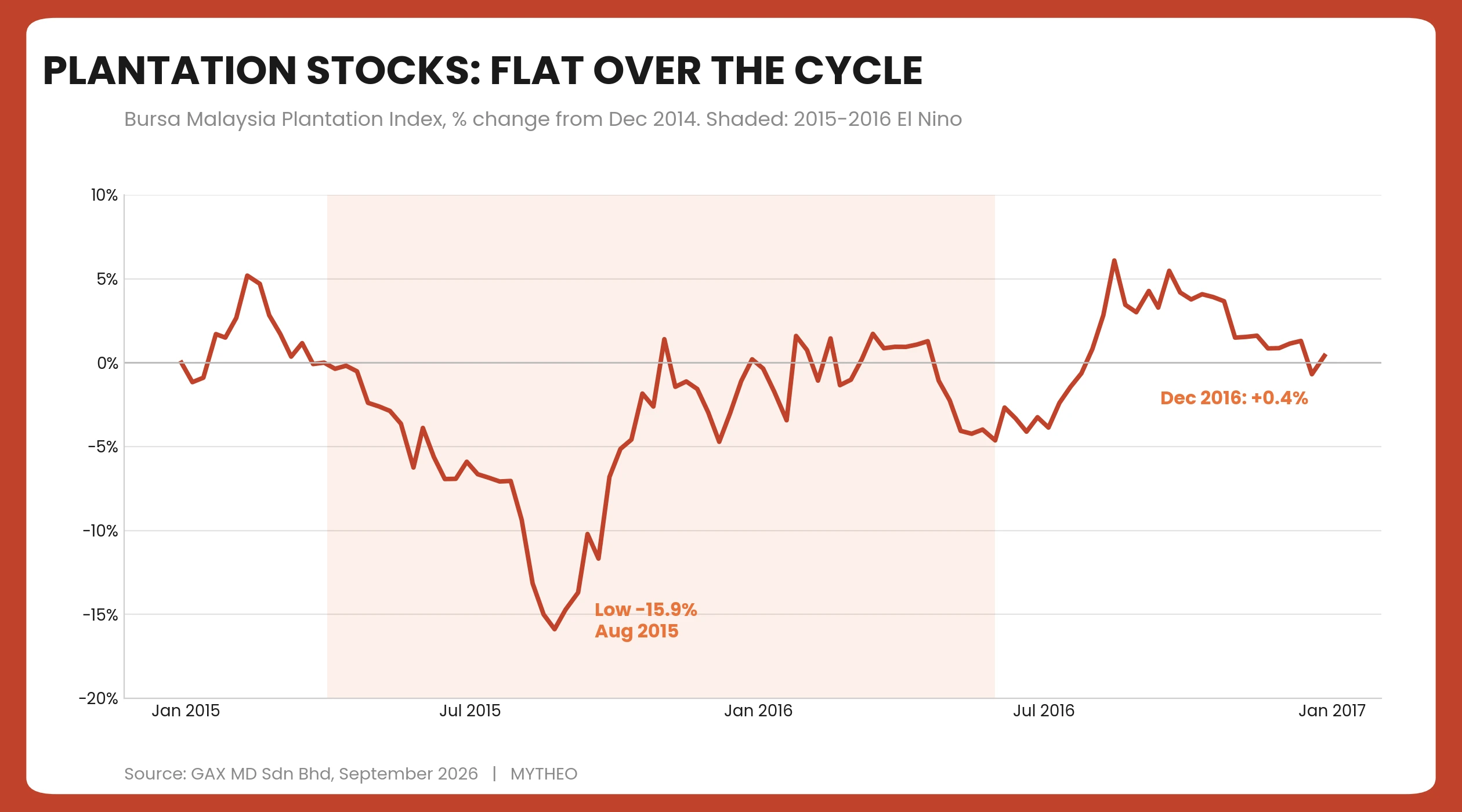
The Malaysian experience tells a similar story. Despite El Nino being widely regarded as a positive catalyst for plantation stocks, the Bursa Malaysia Plantation Index generated only modest returns during the 2015-2016 cycle. Much of the expected benefit had either been priced in ahead of time or was offset by broader macroeconomic headwinds.
This highlights the fundamental challenge of thematic investing based on weather events. The macro narrative may be correct, but success depends entirely on timing. Investors must not only correctly identify the trend but also determine precisely when to enter and when to exit. For most market participants, that is far easier said than done.
The 2015-2016 Super El Nino Offered Only Brief Trading Windows
Plantation Stocks Delivered Limited Gains During the Last Super El Nino 2015 – Dec 2016
A Better Way to Position for Climate Volatility
Rather than making a concentrated bet on a single commodity or attempting to time short-term market moves, investors are better served by owning a diversified portfolio with structural exposure to the sectors that benefit from the broader consequences of climate volatility.
This is where MYTHEO Essential portfolio offers a compelling proposition.
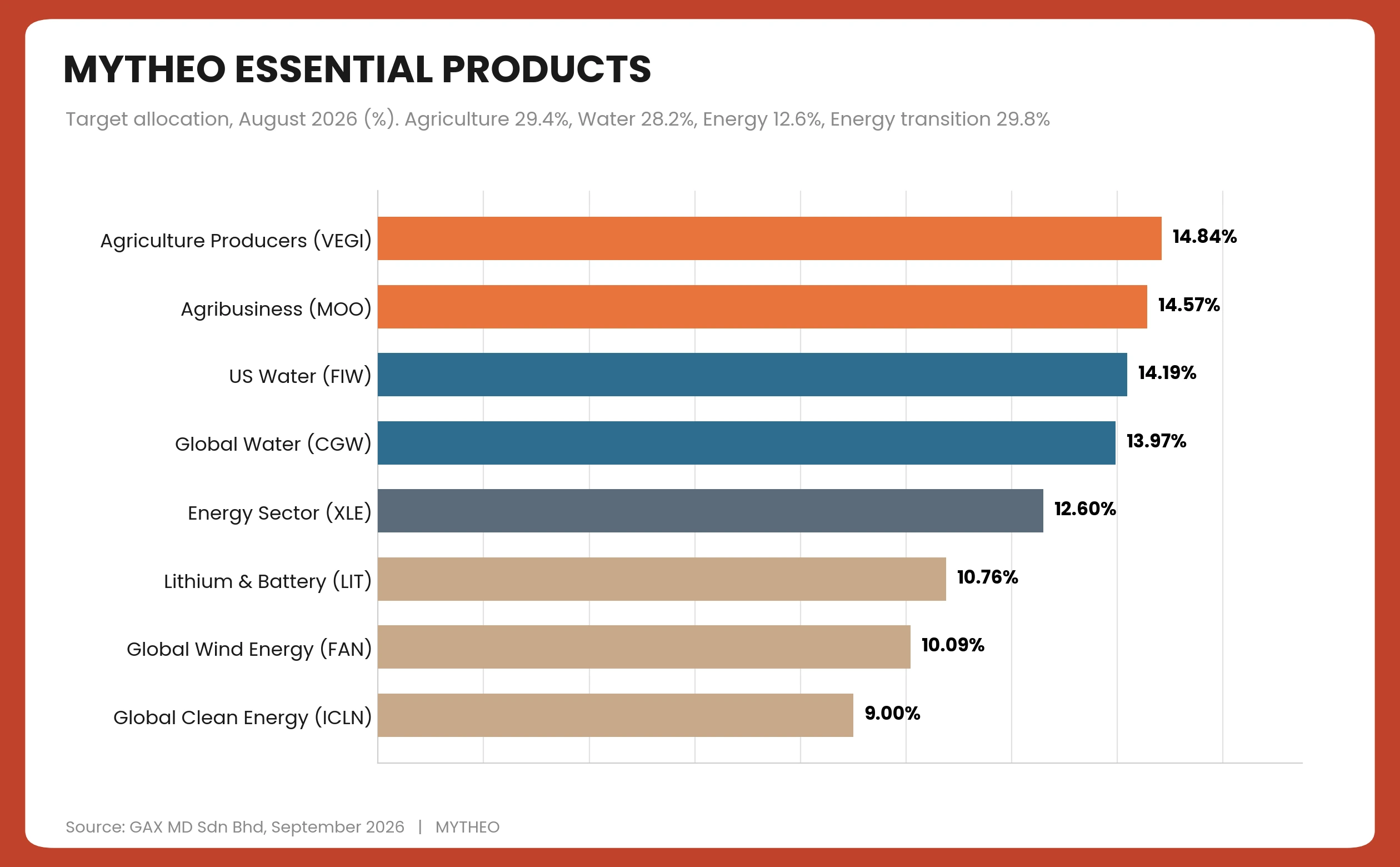
The portfolio maintains meaningful exposure to agriculture-related themes through holdings in agricultural commodities, producers, and agribusiness companies. Key positions include exposure to funds such as VEGI (Agriculture Producers), MOO (Agribusiness), and DBA (Commodities). This provides investors with participation across different segments of the agricultural ecosystem, rather than relying on the unpredictable price of a single crop.
Importantly, the portfolio's exposure extends beyond agriculture alone. Water infrastructure and management are critical areas that benefit from increasingly volatile weather patterns. As droughts become more frequent, resource management becomes paramount. MYTHEO Essential holds positions in US Water (FIW) and Global Water (CGW), capturing the long-term necessity of water infrastructure under extreme climate conditions.
In other words, investors are not simply betting on wheat, corn, or soybeans. They are gaining diversified exposure to multiple themes that may benefit from the changing climate environment while avoiding the risks associated with concentrated commodity positions.
The target allocation MYTHEO Essential Portfolio in August 2026
Conclusion
El Nino may prove to be one of the defining environmental and market themes in the months ahead, but investors should be careful not to confuse a powerful weather event with a durable, linear investment trend. History shows that commodity markets react swiftly and unpredictably to supply disruptions, making market timing exceptionally difficult.
The key takeaway is not to chase short-term commodity spikes, but to gain exposure through a diversified, structural approach. Portfolios that benefit from stronger agricultural earnings and critical resource management, while remaining resilient across different market environments, are far better positioned to capture long-term opportunities.
For investors seeking exposure to the potential beneficiaries of a changing climate, MYTHEO Essential offers a disciplined solution. It captures the theme within a broader portfolio framework, helping investors stay invested in the future of global resources while avoiding the pitfalls of concentrated, tactical weather bets.
Ready to explore how MYTHEO works for your goals? Learn more here.
Or download our app so you can start investing in a moment. Download on iOS here or Android here.
To register for MYTHEO, you can get started here.
This material is subject to MYTHEO’s Notice and Disclaimer.