Key Takeaways
- The war in Iran conflict is structurally different from war between Russian and Ukraine. It is logistical transit disruption, not a systemic loss of a global trade partner.
- MYTHEO's Inflation Hedge and Essential portfolios have delivered over 10% YTD returns as geopolitical tailwinds materialise.
- Concentrating into a single trade is dangerous. Markets reverse sharply on diplomatic developments. Diversification remains the only reliable defence.
As headlines spotlight the escalating conflict involving Iran, investors understandably question the potential impact on their investment portfolios. The last comparable upheaval was the Russia-Ukraine war in 2022, which triggered record inflation in the US and Europe and sent shockwaves across equity, commodity, and bond markets. While it is natural for such events to provoke concern, market dynamics are often more complex than the headlines imply. In this report, we clarify how the current Iran crisis differs fundamentally from the 2022 Russia-Ukraine conflict and highlight the specific bottlenecks that actually matter for your wealth.
The Comparative Lens: Why This Is Not 2022
To maintain a clear perspective, we must compare the current tensions with the Russia-Ukraine conflict. While the headlines today are jarring, the systemic risk is notably different.
The war in Ukraine created a massive, structural supply shock because Europe was deeply integrated with Russian energy and agricultural exports. Russia was a G20 economy that was suddenly severed from the global financial system. This conflict hit food prices, energy markets, and manufacturing inputs simultaneously, creating a broad inflationary weight. Because the EU had to physically and politically decouple from Russian pipeline gas, the market required a multi-month process to find a bottom.
In contrast, Iran has been largely decoupled from the global economy for decades due to existing sanctions. Consequently, Iran’s footprint in global trade is already constrained, and its ability to cause broad, systemic economic disruption is more limited than many fear. While the Russia-Ukraine war was a "structural" loss of a trade partner, the current situation is a "logistical" disruption of a transit route
The Strait of Hormuz: The Real Pressure Point
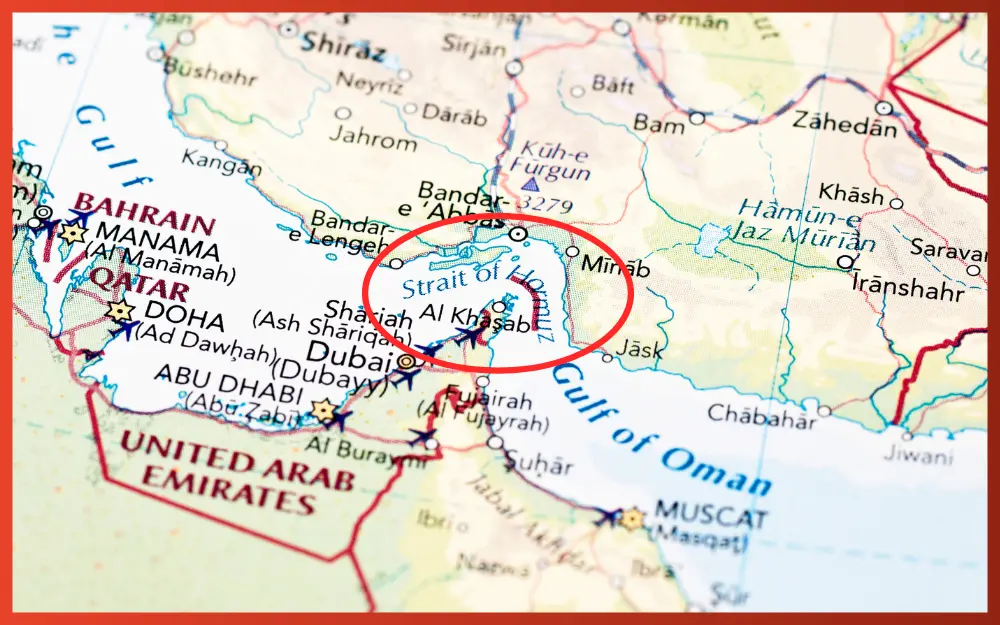
The Strait of Hormuz is a narrow passage between Iran and Oman that connects the Persian Gulf to the Arabian Sea. A critical waterway for 20% of the world's energy supply.
Approximately 15-20 million barrels of crude oil transit the Strait every day, representing up to 20% of global petroleum consumption. It is also the exit point for roughly 20% of the world’s liquefied natural gas (LNG) supply, nearly all of which originates from Qatar.
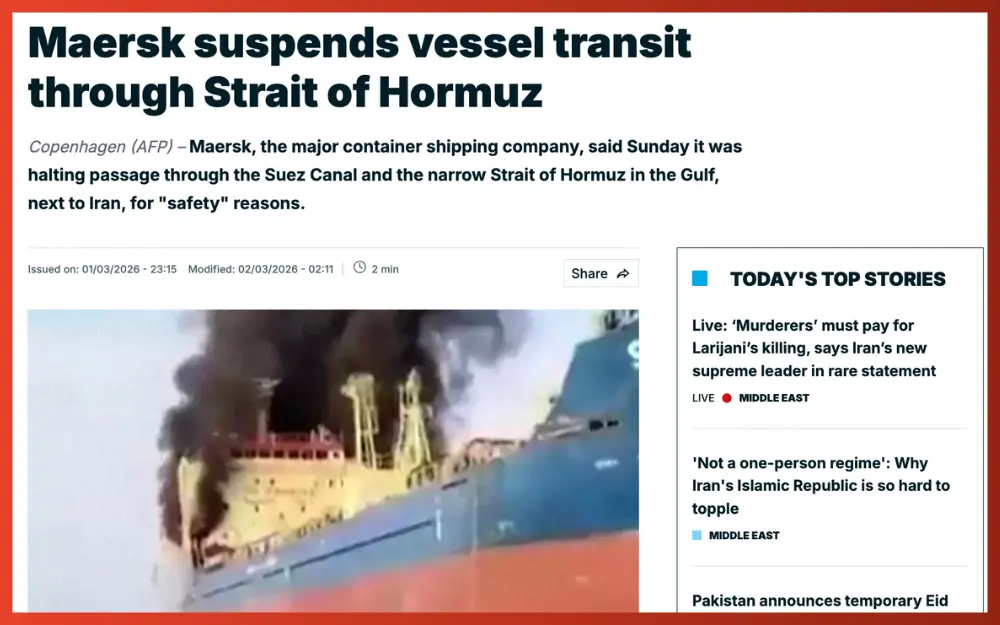
On March 4, Qatar’s state-run energy firm declared force majeure following attack of its main facilities that led to suspension of its natural gas production. Also, we are already seeing the ripple effects. Major shipping firms like Maersk have suspended transits through the Strait for safety reasons.
Asia bears the greatest exposure here because more than 80% of the crude oil passing through the waterway is bound for Asian markets, specifically China, India, Japan, and South Korea. While Saudi Arabia and the UAE have pipelines that can bypass the Strait, these can only handle a fraction of the usual volume.
How Markets and MYTHEO Are Responding
While we firmly believe that war is a tragedy for humanity, the financial reality is that not all market movements are headwinds. Geopolitical conflict often creates specific, targeted tailwinds for certain asset classes, and investing requires looking deeper than the initial shock.
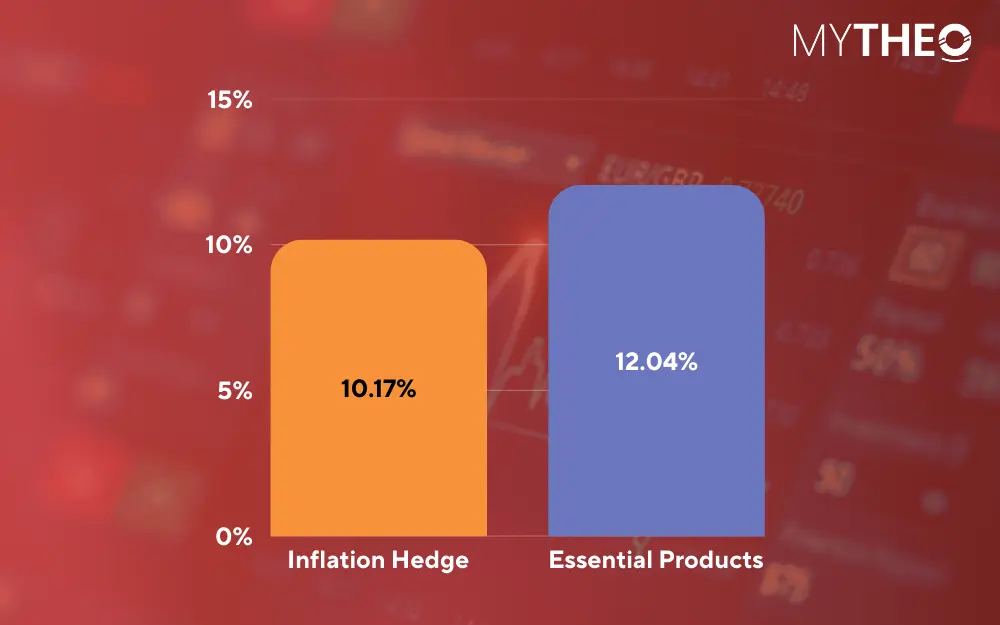
The recent volatility has created opportunities that the MYTHEO portfolios have already captured. For example, our Inflation Hedge portfolio and Essential portfolio already went up by more than 10% in the first two months of the year.
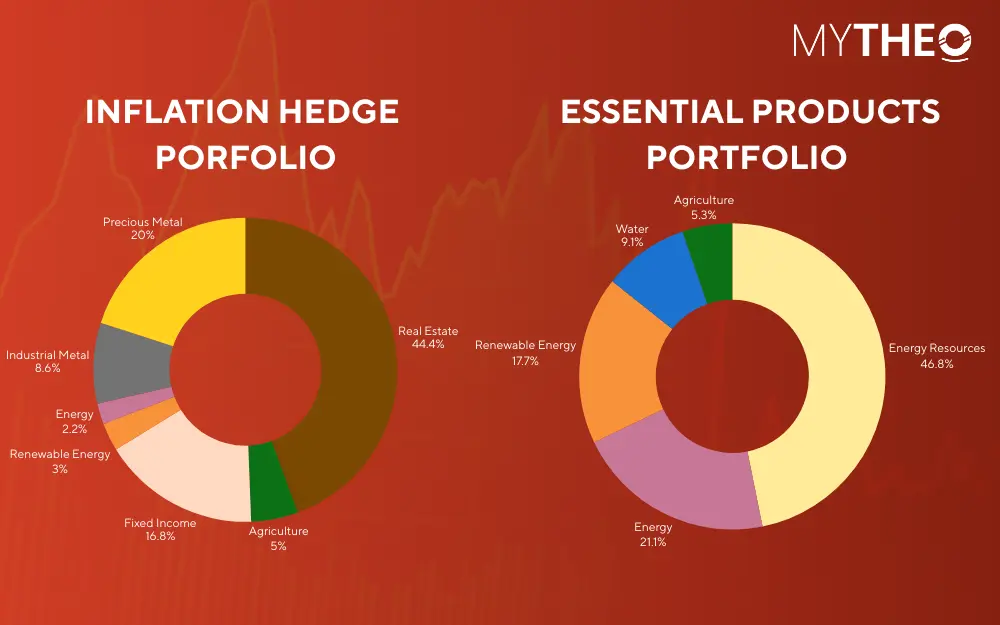
The Inflation Hedge portfolio delivered strong returns, driven primarily by a rally in precious metals. As geopolitical uncertainty increased, investors shifted toward gold and silver, which represent approximately 20% of the total portfolio exposure.
The Essential portfolio also saw significant gains due to rising crude oil prices. This strategy maintains a 10.8% allocation to traditional energy companies alongside a 35.0% exposure in renewable energy sectors such as wind, solar, and lithium
Inflation Hedge and Essential Portfolio Sector Allocations
Inflation Hedge and Essential Products portfolio return in the first two months of 2026.
Why We Avoid "One-Way Bets"
Despite the strong performance of our Inflation Hedge and Essential portfolios, we are not recommending that investors concentrate their entire strategy into precious metals or energy. War-driven uncertainty is notoriously difficult to price accurately.
Markets that surge on conflict news can reverse just as sharply the moment a ceasefire is announced or diplomatic progress is made. These turning points are rarely announced in advance. An investor who concentrates heavily on energy or gold right before such a reversal could lose their gains quickly and miss the broader market recovery that typically follows a resolution.
The Long View: War is Temporary
Long-term investors should remember that geopolitical conflicts eventually pass. Markets are forward-looking by nature.
Potential regime changes in Iran or shifts in the political landscape of Venezuela could eventually unlock two of the world’s largest oil reserves. Both are currently sidelined by sanctions and internal politics. If these constraints ease, the resulting surge in supply could shift the energy market from a shortage to an oversupply, placing significant downward pressure on prices.
While it is impossible to predict the exact timing of such shifts, they remind us that the forces creating short-term price spikes can eventually lead to different fundamental realities.
Conclusion
Our recommendation remains unchanged: maintain a diversified exposure across asset classes. The MYTHEO ecosystem is specifically designed to navigate these shifting market conditions by using a disciplined, algorithm-driven approach that monitors volatility in real time. By allowing data to adjust allocations as conditions evolve, we remove the emotional bias that often leads to costly mistakes during a crisis.
While the 2022 Russia-Ukraine war showed how global markets react to systemic shocks, the current situation reminds us that targeted disruptions require a rational, calculated response. The strong recent performance of our Inflation Hedge and Essential portfolios proves that opportunities persist even in times of conflict, provided you have the structural discipline not to chase the noise
Stay diversified, stay disciplined, and let the data lead the way
Ready to explore how MYTHEO works for your goals? Learn more here.
Or download our app so you can start investing in a moment. Download on iOS here or Android here.
This material is subject to MYTHEO’s Notice and Disclaimer.